
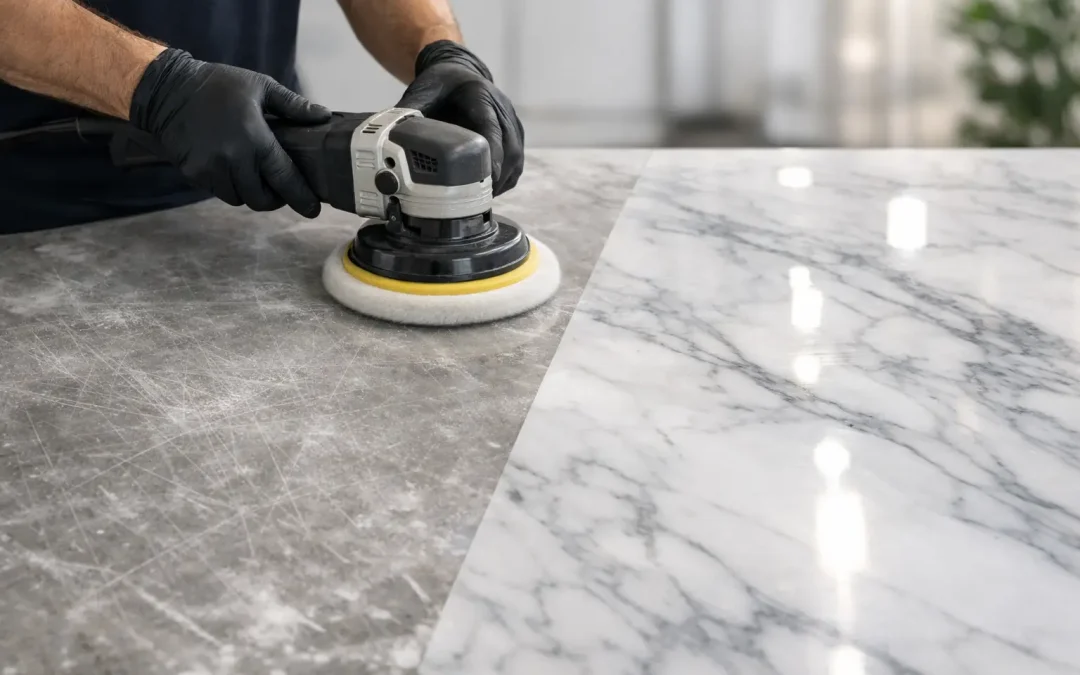
A marble floor can look worn long before it is actually worn out. Fine scratches catch light, dull paths appear near entryways, and a once-reflective countertop starts looking cloudy. Scratched marble recovery is often possible without replacing the stone, but the right solution depends on whether the damage is a true scratch, an etch mark, or a deeper surface defect.
Marble is a premium natural material, but it is softer than many homeowners expect. It rewards proper care with lasting beauty. It also shows damage quickly when abrasive grit, acidic spills, or the wrong cleaning products are involved. Knowing what happened to the surface is the first step toward choosing a repair that will actually last.
What Scratched Marble Recovery Really Involves
Professional recovery is not simply applying a shine product over damaged stone. A lasting restoration process works with the marble itself. Depending on its condition, that may involve cleaning away embedded soil, honing the surface to reduce scratches, polishing it to restore clarity, and applying an appropriate sealer for added protection.
The goal is to create an even appearance across the affected area. Treating one small spot without blending it into the surrounding marble can leave a noticeably different sheen. This is especially common on polished floors, vanity tops, and large marble entryways where light reflects across the entire surface.
The amount of material removed during restoration is controlled and typically minimal. That is why marble can often be renewed more than once over its life, provided the work is handled correctly and the stone has not been compromised by cracks, loose tiles, or previous improper repairs.
Is It a Scratch or an Etch Mark?
Homeowners often call every dull mark on marble a scratch, but scratches and etches need different treatment. A scratch is physical abrasion. It may be caused by sand tracked in on shoes, furniture dragged across a floor, gritty debris under a chair leg, or abrasive pads used during cleaning.
An etch mark is chemical damage. Marble contains calcium carbonate, which reacts with acids. Lemon juice, vinegar, wine, tomato-based foods, bathroom products, and some general-purpose cleaners can leave a dull or lighter-looking mark. The marble may feel smooth even though it looks damaged.
A quick test can offer a clue. If a mark is visible but feels smooth when you run a fingertip over it, etching may be the problem. If you can feel a groove or rough line, it is more likely a scratch. Both can occur in the same area, particularly on kitchen counters and bathroom vanities.
This distinction matters because waxes, topical coatings, and household polish products may temporarily hide a problem while leaving the actual damage behind. Some products can also create buildup that makes future polishing more difficult.
Why High-Traffic Marble Loses Its Shine
On marble floors, damage is rarely caused by one dramatic event. More often, everyday foot traffic slowly grinds fine grit into the finish. The result is a network of tiny scratches that scatters light instead of reflecting it cleanly. The floor may look dirty even after it has been mopped.
In North Central Florida, sand and outdoor debris can make this issue more noticeable around entrances, patios, and rooms connected to pool areas. A quality entry mat and regular dry dust mopping can make a real difference, but once the finish is visibly dulled, routine cleaning alone will not restore the polish.
When Marble Can Be Repaired
Most light to moderate scratches respond well to honing and polishing. Surface-level etching, traffic wear, and dullness can usually be corrected without replacement. Even a floor that looks uniformly hazy may have strong restoration potential when the stone is structurally sound.
Deeper scratches may require more intensive honing. The trade-off is that a deeper defect cannot always be removed completely without taking down too much of the surrounding surface. In those cases, the best outcome may be substantial improvement rather than total invisibility. A qualified assessment should set that expectation clearly before work begins.
Cracks, chips, broken edges, loose tiles, and uneven lippage are separate concerns. They may need repair before refinishing begins. Some marble has natural fissures or veining that should not be mistaken for damage. An experienced restoration technician can identify the difference and recommend the right order of work.
Polished, Honed, and Textured Marble Need Different Care
Polished marble has a reflective finish and tends to show scratches and etches most clearly. Recovery generally focuses on restoring a consistent level of gloss without creating swirl marks or uneven shine.
Honed marble has a softer, matte appearance. It is not immune to scratching or etching, but minor marks can be less obvious. The restoration objective is not to make honed marble glossy. It is to return the stone to an even, clean finish that matches its intended look.
Textured or tumbled marble presents another challenge because dirt can collect in low spots and natural variation is part of the material’s character. Aggressive polishing is usually not the answer. Cleaning, targeted repair, and protective sealing are often more appropriate.
Why DIY Scratch Removal Can Make Things Worse
It is understandable to want a fast fix for a visible mark. Unfortunately, many common DIY methods create a larger problem. Acidic cleaners can etch marble further, abrasive powders can leave circular scratches, and consumer polishing compounds can produce a shiny spot that does not match the rest of the surface.
Avoid vinegar, lemon-based cleaners, scouring pads, and products labeled for general stone unless they specifically state they are safe for marble. Also avoid using a household floor buffer on marble without the proper pads, abrasives, and technique. A floor can develop uneven gloss, edge marks, or haze in a short amount of time.
For a fresh spill, blot it rather than wiping it outward. Clean the area with a pH-neutral stone cleaner and a soft cloth, then dry the surface. For a true scratch or etched patch, pause before trying multiple remedies. Layering products onto damaged marble often delays the proper repair.
The Professional Restoration Process
A reliable marble restoration starts with evaluating the stone’s finish, damage level, prior coatings, grout condition, and overall stability. The work area is then prepared to control dust and protect nearby finishes.
The surface is cleaned before any mechanical work begins. If scratches or etching require correction, diamond abrasives are used in progressive stages to hone the marble evenly. Finer polishing stages bring back the desired finish, whether that means a soft honed look or a higher polish.
After restoration, the marble may be sealed where appropriate. Sealer is not a shield against scratches or acid etching, and it does not eliminate the need for careful cleaning. Its main purpose is to slow the absorption of many water-based and oil-based contaminants, giving homeowners more time to clean up spills before staining occurs.
Natural Surface Restoration evaluates each marble surface based on its condition and intended finish, rather than applying a one-size-fits-all treatment. For homeowners in Gainesville and surrounding communities, that means a clearer recommendation on whether the marble needs cleaning, honing, polishing, sealing, repair work, or a combination of services.
How to Protect Restored Marble
Once the finish has been recovered, small habits help preserve it. Use walk-off mats at exterior doors, but choose mats without rubber or latex backings that can discolor some stone surfaces. Keep chair and furniture pads clean, since trapped grit can still scratch a floor.
Use a soft microfiber mop or cloth for routine care and clean with a pH-neutral product made for natural stone. Do not let spills sit, especially on kitchen counters and bathroom vanities. Coasters, trays beneath toiletries, and cutting boards near food-prep areas are simple safeguards that reduce acid exposure.
For floors, dry dust mopping matters as much as wet cleaning because it removes abrasive grit before it is dragged across the marble. If a surface begins looking dull again, address the cause early. Light traffic wear is generally easier and more cost-effective to correct than years of neglected damage.
Choose Restoration Before Replacement
Replacing marble is disruptive, expensive, and often unnecessary. It can involve demolition, disposal, matching challenges, and the risk that new material will not blend with existing stone. When the marble is stable and the damage is primarily on the surface, restoration preserves the material you chose in the first place.
If your marble looks scratched, cloudy, etched, or uneven, the most helpful next step is an honest condition assessment. The right recovery plan can bring back a clean, consistent finish and help your marble remain a feature you enjoy seeing every day.