
A glass of orange juice left beside the sink, a splash of vinegar near the backsplash, or a gritty shoe at the entry can change the look of marble faster than many homeowners expect. This homeowner guide to marble care explains what protects the stone, what quietly damages it, and when professional restoration is the smarter choice than trying another store-bought cleaner.
Marble brings a high-end, natural look to bathrooms, kitchens, fireplaces, floors, and tabletops. It is also a softer, more reactive natural stone than granite. That does not make marble impractical. It simply means it needs the right routine and a quick response when spills or surface damage occur.
Why Marble Needs a Different Kind of Care
Marble is made primarily of calcium carbonate. That composition gives it its distinctive veining and depth, but it also makes it sensitive to acids. Lemon, wine, tomato sauce, vinegar, many bathroom cleaners, and even some products labeled natural can react with the stone.
The result is often etching. An etch is a dull, lighter-looking mark where the surface has been chemically altered. It is not always a stain, which is why repeated scrubbing or stain remover may not fix it. On polished marble, etching is especially noticeable because it interrupts the reflective finish.
Marble can also scratch, absorb liquids, and lose polish over time. In Gainesville and across North Central Florida, moisture around showers, outdoor entries, and pool-adjacent areas can add another layer of concern. The right care plan depends on where the marble is installed, how much traffic it gets, and whether it has a polished, honed, or textured finish.
Daily Marble Care That Prevents Most Damage
The best marble maintenance is simple and consistent. Remove grit before it is ground into the surface, wipe spills promptly, and use products made for natural stone rather than general household cleaning products.
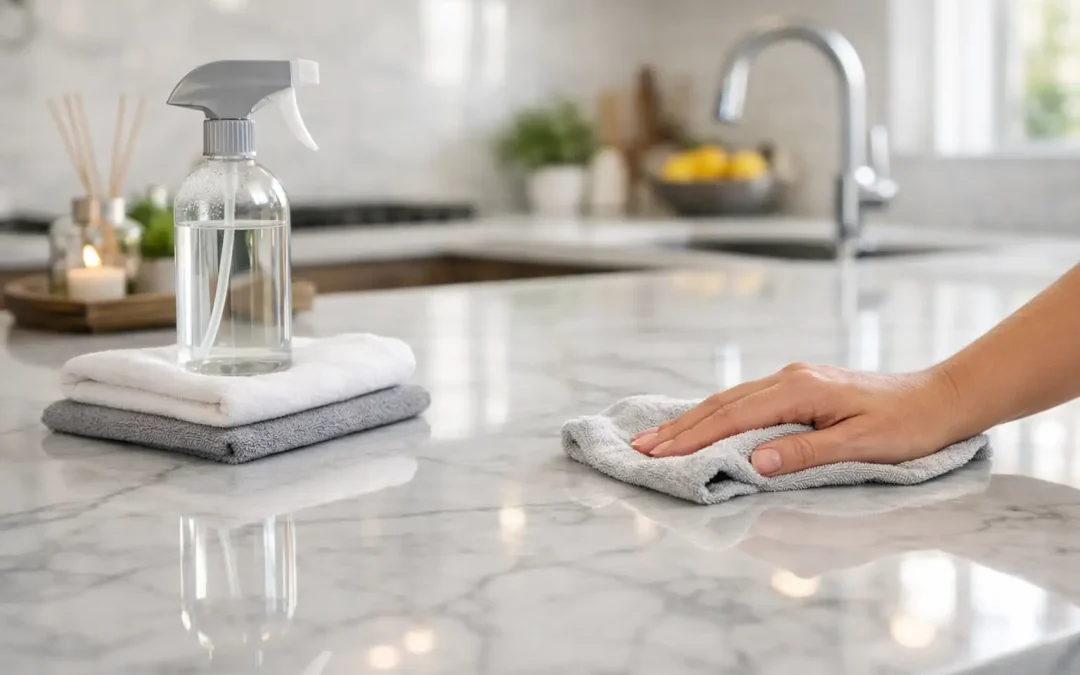
For regular cleaning, use a soft microfiber cloth or mop with warm water and a pH-neutral stone cleaner. Avoid soaking the surface. Excess water can leave residue and, around seams or edges, create unnecessary moisture exposure.
A practical routine includes these habits:
- Wipe food, drinks, toothpaste, cosmetics, and soap residue as soon as possible.
- Use coasters under glasses and trays beneath bottles, especially on marble vanities and counters.
- Place mats at exterior doors and use felt pads beneath furniture on marble floors.
- Sweep or dust-mop floors often to remove sand and grit before it scratches the finish.
- Dry shower walls, niches, and curbs after use when possible to limit mineral buildup and soap film.
Do not use vinegar, lemon-based cleaners, bleach, ammonia, powdered scrubs, or abrasive pads. A cleaner can smell fresh and still be wrong for marble. When in doubt, test a stone-safe product in a small, low-visibility area first.
Polished vs. Honed Marble
A polished marble surface has a glossy finish that reflects light. It looks dramatic, but etches and fine scratches tend to show more clearly. Honed marble has a softer, satin-like appearance. It is often more forgiving visually, particularly in busy kitchens and bathrooms, although it can still stain or etch.
Neither finish is maintenance-free. The better option depends on your expectations. If you prefer a crisp, reflective appearance, polished marble may be worth the added attention. If your home has active family use or frequent entertaining, a honed finish can hide day-to-day wear better.
Stains, Etches, and Scratches Are Not the Same Problem
Homeowners often see a mark on marble and assume it needs stronger cleaner. That approach can make the damage worse. Correct treatment starts with identifying the problem.
A stain is discoloration caused by something absorbed into the stone. Oil, cosmetics, rust, hard water minerals, and colored liquids can all leave stains. Depending on the source and how long it has been present, some stains can be reduced with the correct poultice or professional treatment.
An etch is surface damage caused by acid. It may look like a cloudy ring, a dull spot, or an area that seems lighter than the surrounding stone. Because the finish itself has changed, cleaning alone will not restore the shine. The affected area may need honing and polishing.
A scratch is physical damage from grit, dragged furniture, abrasive tools, or hard objects. Fine scratches may be less noticeable after professional polishing, while deeper scratches can require more involved restoration. Chips, cracks, and loose tiles should also be evaluated before they spread or allow moisture beneath the stone.
Sealing Marble: Useful Protection, Not a Force Field
A quality penetrating sealer can help slow the absorption of liquids into marble. This gives you more time to wipe up a spill before it becomes a stain. It does not prevent etching, scratching, or wear from abrasive traffic.
That distinction matters. Sealing is one part of protection, not a substitute for proper cleaning. A sealed marble countertop can still etch from lemon juice. A sealed floor can still become dull where dirt and grit are repeatedly tracked across it.
How often marble should be sealed depends on the stone, finish, location, and previous treatment. Kitchen counters, shower surfaces, and high-use bathroom vanities may need more attention than a decorative fireplace surround. A professional assessment can determine whether the stone needs cleaning, resealing, polishing, or a combination of services.
A Homeowner Guide to Marble Care by Location
Kitchen Counters and Islands
Kitchen marble is exposed to the widest range of risks: acidic foods, cooking oils, colored drinks, hot cookware, and frequent cleaning. Use cutting boards, trivets, and coasters. Wipe splashes as they happen rather than leaving them until cleanup time.
If your counter develops dull rings near the coffee station or sink, they are likely etches rather than stains. This is a common issue and one that can often be professionally corrected without replacing the countertop.
Bathroom Vanities and Showers
Bathrooms expose marble to toothpaste, hair products, makeup, soap, hard water, and cleaners that may be too aggressive. Keep a soft cloth nearby for quick wipe-downs, and choose a stone-safe cleaner for routine care.
In showers, buildup may be a mix of soap scum, mineral deposits, and surface dullness. Do not attack it with acidic descalers or harsh scrub pads. Marble shower restoration often requires specialized cleaning methods followed by honing, polishing, and sealing where appropriate.
Floors, Entryways, and Fireplaces
Marble flooring takes physical wear more than chemical exposure. Dirt, sand, pet grit, and dragged furniture are the usual culprits. Use entry mats, clean them regularly, and lift rather than slide heavy pieces across the floor.
Fireplace surrounds can collect soot and residue, while hearths may be exposed to ash and dropped objects. Cleaning should be gentle and controlled. If the surface looks cloudy, scratched, or unevenly shiny, restoration can bring back a more consistent finish.
When Professional Marble Restoration Makes Sense
There is a point where careful cleaning will no longer change the appearance of marble. If the surface remains dull after proper cleaning, has widespread etching, visible scratches, stubborn stains, or uneven shine, it may need restoration rather than another product.
Professional marble polishing can refine the surface and restore clarity to polished stone. Honing addresses etching, light scratches, and uneven wear before polishing if a glossy finish is desired. Deep cleaning and sealing can help protect the stone after the underlying problems are corrected.
The right process depends on the marble itself. Over-polishing a floor that was intended to be honed can create an appearance you did not want. Treating a stain without identifying its source may lead to repeat damage. A qualified restoration professional should assess the finish, condition, location, and homeowner goals before recommending work.
For homeowners in Gainesville and surrounding communities, Natural Surface Restoration provides marble cleaning, polishing, sealing, and restoration services designed to preserve the surface instead of replacing it prematurely. A clear estimate and an in-person evaluation can help determine the practical next step for your marble.
Marble rewards steady care, not aggressive cleaning. Protect it from acids and grit, respond quickly to spills, and address dullness early. With the right attention, the stone can keep its character and value for many years.