
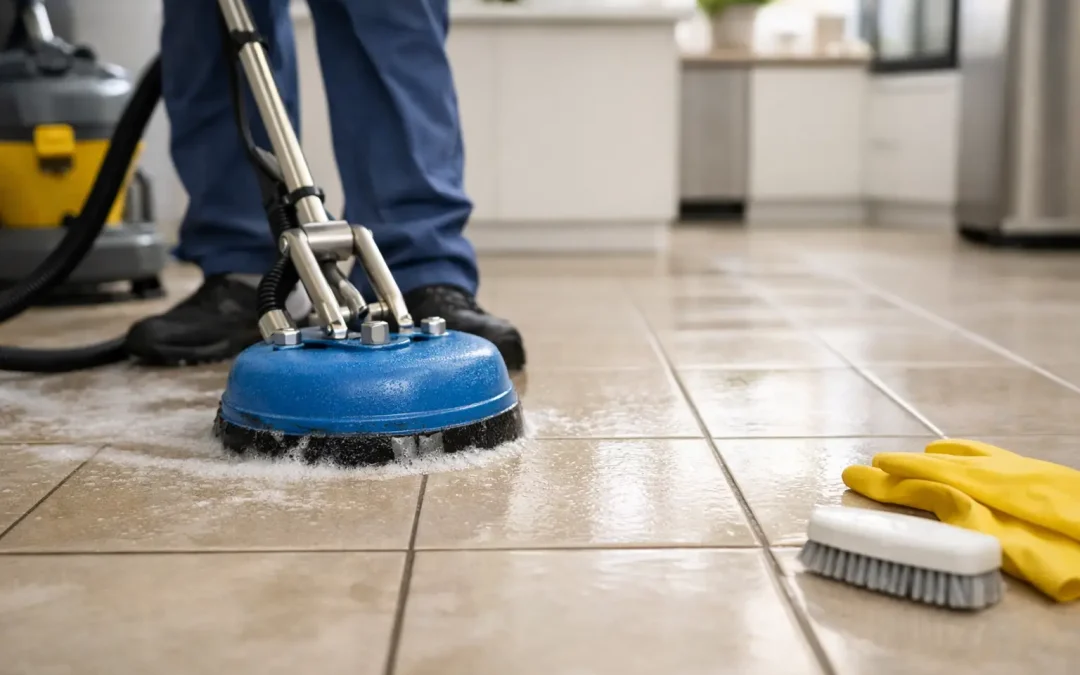
Your tile may look clean right after mopping, yet the grout lines still appear dark, uneven, or permanently stained. That is usually a sign that soil has settled below the surface, where household cleaners and mop water cannot reach. A professional tile floor deep cleaning service is designed to remove that embedded buildup and bring back the cleaner, more consistent appearance your floors once had.
For Gainesville-area homeowners, tile floors often take on more than everyday foot traffic. Humidity, tracked-in sand, pets, cooking residue, hard-water minerals, and busy family routines can all leave tile and grout looking older than they are. The right cleaning approach can improve the appearance of the floor without the cost and disruption of replacement.
What Deep Cleaning Does for Tile and Grout
Tile itself is often fairly easy to wipe down, especially ceramic and porcelain. Grout is the harder part. Its cement-based structure is naturally porous unless it has been properly sealed, so it absorbs moisture, spills, oils, and fine dirt. Over time, those contaminants create grout lines that look brown, gray, or blotchy even after repeated mopping.
Professional cleaning uses specialized equipment and cleaning solutions selected for the condition of the floor. The process loosens trapped soil, agitates the grout safely, and extracts the dirty solution rather than spreading it from one area to another. This is different from simply applying a strong cleaner and scrubbing by hand.
A deep cleaning can help remove ground-in dirt, cooking grease, soap residue, pet-related stains, and dulling film. It can also reveal the actual condition of the grout. Sometimes grout is dirty. Other times, it is permanently discolored, cracked, or worn away in spots. Knowing the difference matters because cleaning alone cannot repair damaged grout or reverse every stain.
Signs You Need a Tile Floor Deep Cleaning Service
The clearest sign is grout that stays dark after normal cleaning. You may also notice that the floor looks cleaner in the center of the room than around entrances, appliances, or walkways. In kitchens, a sticky or hazy feel can point to grease and cleaner residue. In bathrooms, mineral deposits, soap film, and moisture exposure often create a different kind of buildup.
Look closely at the grout color near the baseboards or in a closet. If those protected areas are noticeably lighter than the main traffic paths, the floor likely needs more than regular maintenance. A deep cleaning is also worthwhile before listing a home, hosting a major event, or deciding whether worn-looking tile should be replaced.
If the tile surface has cracks, loose pieces, missing grout, or signs of moisture below the floor, cleaning should not be the first step. Those conditions may require repair or a closer inspection. A dependable surface professional should identify problems honestly rather than treating every issue as a cleaning job.
Why Mopping Can Make Grout Look Worse
Mopping is useful for routine care, but it has limits. A traditional mop can leave behind dirty water, especially when the water is not changed often. It may also push moisture and dissolved soil into grout joints. Some household products leave a shiny residue that attracts more dirt over time, making the floor look dull or streaky.
Too much water is another common problem. Saturating grout repeatedly does not make it cleaner, and standing moisture can be especially troublesome around damaged grout or failed caulk. Abrasive powders, harsh acids, and bleach-heavy products may create their own issues by weakening grout, etching certain materials, or causing uneven color.
The right maintenance routine depends on the tile. Porcelain and ceramic tile generally tolerate more cleaning options than natural stone. Travertine, limestone, marble, and other calcareous stones need stone-safe products and methods that will not etch or dull the finish. A floor that looks like ordinary tile may need more specialized care than expected.
What to Expect From Professional Tile and Grout Cleaning
A quality service begins with an assessment of the tile type, grout condition, traffic patterns, stains, and any prior coatings or sealers. This helps determine which cleaning solution and level of agitation are appropriate. The goal is not to use the harshest chemical available. It is to use the right method for the material and the problem.
The floor is typically prepared, treated, and mechanically agitated so embedded soil can be released from the grout lines and textured tile surface. Professional extraction equipment then removes the cleaning solution and loosened contaminants. Edges, corners, and stubborn areas may require additional hand detail work.
Results vary based on the age of the grout, its original color, prior sealers, and the type of staining present. Deep cleaning can make a dramatic difference, but it will not make chipped tile disappear or turn damaged grout into new grout. Clear expectations are part of good service, particularly on floors that have been neglected for years.
After cleaning, the floor should be allowed to dry fully before determining whether sealing or color restoration is the best next step. Natural Surface Restoration can help homeowners evaluate the floor as a complete system, including the tile, grout, surrounding natural stone, and the protection each surface needs.
When Grout Color Sealing Makes Sense
If grout is clean but still unevenly stained, color sealing may be a better solution than repeated aggressive cleaning. A grout color sealant creates a more uniform appearance while adding a protective barrier that helps resist future soil and spills. It can refresh faded grout or change its color to better suit the room.
Color sealing is especially useful on older floors with light grout in busy kitchens, entryways, bathrooms, and laundry rooms. Light grout can look sharp when new but often shows every bit of traffic. A carefully chosen color can give the floor a cleaner, more finished look while making day-to-day maintenance easier.
This option is not necessary for every floor. Newer grout in good condition may only need a penetrating sealer after cleaning. Very damaged grout may need repair before any protective treatment. The best recommendation depends on what the floor needs now and how the household uses the space.
Protecting Results After the Cleaning
Once the floor has been professionally cleaned, simple habits can help it stay that way longer. Use doormats at exterior entrances, wipe up spills promptly, and sweep or vacuum dry debris before mopping. Fine grit acts like sandpaper under shoes and can wear on both tile finishes and grout over time.
Use a pH-neutral cleaner suited to your specific floor, and avoid leaving cleaner residue behind. A microfiber mop with clean water changed frequently is a better choice than repeatedly using a heavily soiled mop head. In kitchens, a quick wipe around the range, refrigerator, and dining area can prevent grease and food residue from becoming a larger cleaning project.
Sealing can provide valuable protection, but it is not a permanent shield. It reduces absorption and makes routine cleanup easier. It does not prevent all staining, eliminate maintenance, or repair grout that has already failed. High-traffic areas may need attention sooner than low-use rooms.
A Cleaner Floor Without Replacing It
Tile replacement is sometimes necessary, but it is often considered too early. When the tile is structurally sound and the problem is mostly dirt, dullness, or discolored grout, restoration can be a practical alternative. Professional deep cleaning and appropriate protection can improve the room’s appearance while preserving a surface that still has years of service left.
If your tile floor looks tired despite regular mopping, an estimate can clarify whether deep cleaning, grout color sealing, repair, or another restoration approach will produce the best result. A careful evaluation gives you a practical path forward and helps your home look well cared for again.