
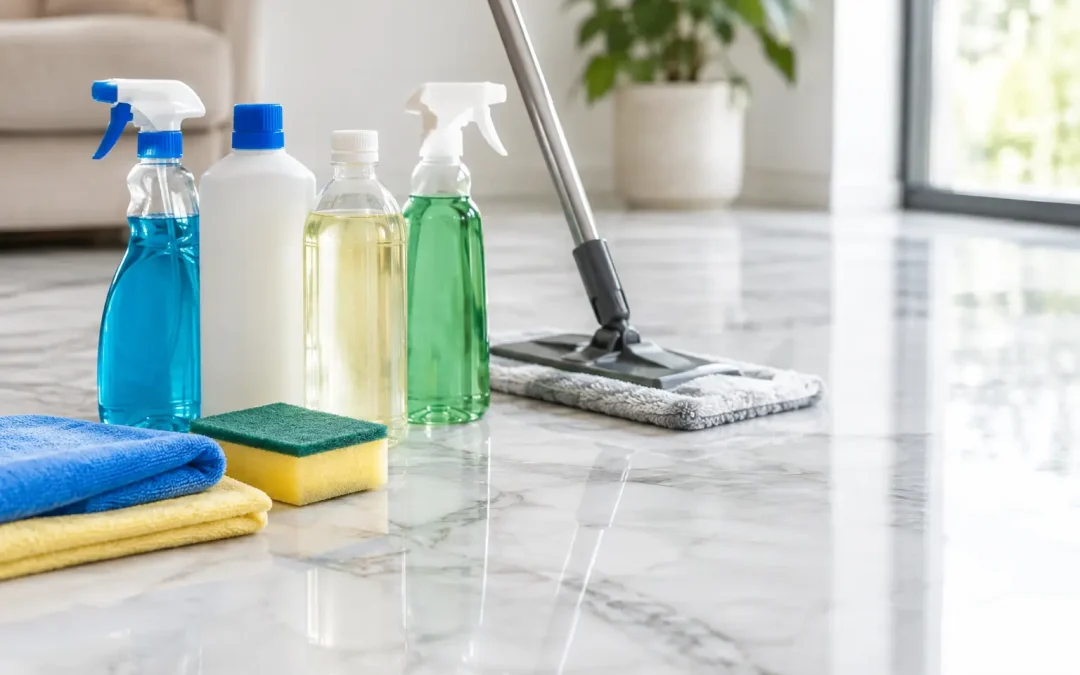
A marble floor can look clean and still be in trouble. Haze around the kitchen, dull paths through a foyer, and pale rings near a vanity are often signs that the wrong cleaner has slowly etched or dulled the surface. The best marble floor cleaners remove everyday soil without attacking the stone’s polished finish, protective sealer, or natural color.
For homeowners, the challenge is that marble is not cleaned like ceramic tile, vinyl, or sealed concrete. It is a calcium-based natural stone, which means common household products can cause permanent-looking changes in minutes. Choosing the right cleaner matters, but so does recognizing when a floor needs restoration rather than another bottle from the store shelf.
What Makes the Best Marble Floor Cleaners Safe?
A safe marble cleaner is generally pH-neutral, non-acidic, and made specifically for natural stone. It should lift light dirt, cooking residue, tracked-in grime, and ordinary spills without leaving a sticky film behind. Read the label closely. If it says it is safe for natural stone and does not contain acidic ingredients, it is usually a suitable starting point for routine care.
The word “natural” on a label is not enough. Citrus oils, vinegar, lemon juice, and other naturally derived acids can still etch marble. Likewise, a powerful degreaser may be useful on other surfaces but too harsh for a polished marble floor. The goal is not the strongest product. It is the product that cleans effectively while preserving the finish.
Your floor’s finish also matters. Honed marble has a softer, matte appearance and may hide light etching better than polished marble, but it can still stain or develop residue. Polished marble reflects light sharply, so streaks, etch marks, and worn traffic paths tend to show sooner.
7 Best Marble Floor Cleaners for Common Situations
There is no single cleaner that is best for every marble floor and every mess. These are the most useful cleaner categories for safe home care, along with the situations where each makes sense.
- A pH-neutral ready-to-use stone cleaner is the most dependable choice for regular cleaning. It is convenient for lightly soiled bathrooms, entryways, and living areas because there is no mixing guesswork. Choose a formula labeled for marble, limestone, travertine, and other calcite-based stones.
- A concentrated neutral stone cleaner works well for larger floor areas. It can be more economical, but follow the dilution instructions exactly. Using too much concentrate does not make the floor cleaner. It can leave residue that makes marble appear cloudy or attract dirt faster.
- A neutral stone cleaner with a low-residue formula is a strong option for polished marble. Polished surfaces show streaks easily, especially in rooms with direct Florida sunlight. A product designed to rinse clean helps preserve that crisp, reflective look.
- A mild stone-safe cleaner for routine mopping is useful when floors are cleaned frequently. In a busy home with pets, children, or regular guests, gentle weekly care is better than waiting until grime requires aggressive scrubbing. Use a well-wrung microfiber mop rather than soaking the floor.
- A stone-safe degreasing cleaner can help in kitchens where oils and food residue collect. This is not the same as a standard kitchen degreaser. Confirm that the product is specifically approved for marble, then test it in a hidden area before cleaning the full floor.
- A poultice product for isolated oil or organic stains can be appropriate when a spill has penetrated the stone. This is a spot-treatment product, not a floor cleaner. Coffee, cooking oil, and certain plant-based stains may need more than surface washing, and the wrong treatment can worsen discoloration.
- Warm water with a small amount of neutral stone cleaner is often the right answer for a floor that is only lightly dusty. Marble does not need heavy chemical buildup to stay presentable. Vacuum or dry-dust first with a soft attachment, then use minimal moisture to remove the remaining soil.
Brand names can be helpful, but the formulation and label matter more than the name on the bottle. A product may be excellent for granite yet not ideal for a particular marble finish. When in doubt, check that marble is listed specifically and test a small, concealed section.
Clean Marble Floors Without Leaving a Film
Even the right cleaner can produce poor results when it is used incorrectly. Start by removing loose grit. Sand, soil, and tiny hard particles dragged under a mop can create fine scratches over time, particularly near exterior doors.
Next, mix or apply the cleaner according to the label. Use a microfiber mop pad that is clean and lightly damp, not dripping. Work in manageable sections and replace the water or mop pad once it becomes dirty. Mopping a large floor with gray water simply spreads fine soil back across the stone.
Do not let cleaning solution sit and dry on the floor. Wipe the section clean, then buff away remaining moisture with a dry microfiber cloth if streaking is a concern. This extra step is especially worthwhile on dark marble or highly polished light-colored floors.
Avoid abrasive scrub pads, stiff brushes, and steam mops unless the marble manufacturer and installer have specifically approved them. Steam can force moisture into vulnerable grout joints or small cracks, while abrasive tools can soften the sheen of polished stone.
Cleaners and Habits That Damage Marble
The most common marble damage often begins with products already under the kitchen sink. Vinegar, lemon-based cleaners, bathroom cleaners for soap scum, toilet bowl cleaners, and many grout cleaners are acidic. On marble, acid reacts with the calcium in the stone and leaves etching. Etches can look like dull spots, whitish marks, or areas that feel less smooth than the surrounding finish.
Bleach and ammonia are not always immediately destructive in the same way acids are, but they are poor choices for regular marble floor care. They can affect sealers, discolor certain stone varieties, and create harsh fumes indoors. Powdered cleaners and abrasive creams are also risky because they can scratch the finish.
Be careful with “shine” products. Some floor polishes and waxes can temporarily create gloss, but they often trap dirt and produce a patchy, plastic-looking buildup. Marble’s best appearance comes from its properly restored natural finish, not from a coating that has to be stripped later.
When Cleaning Is Not Enough
A cleaner can remove dirt. It cannot repair etching, deep scratches, lippage, cracks, worn polish, or stains that have traveled below the surface. If the floor looks dull immediately after careful cleaning, the issue may be mechanical wear or chemical damage rather than trapped grime.
This is where a professional evaluation saves time and repeated product purchases. Natural Surface Restoration can assess whether a marble floor needs deep cleaning, stain treatment, honing, polishing, sealing, or a combination of services. The right process depends on the marble type, finish, damage pattern, and the condition of the grout and surrounding surfaces.
Sealing is valuable when the stone is absorbent and properly prepared, but it is not a shield against etching. A sealer helps slow absorption from spills. It does not stop acidic liquids from changing a polished marble surface, so quick spill cleanup still matters.
A Simple Marble Care Routine That Holds Up
For most homes, dry-dusting several times a week and damp-mopping with a neutral stone cleaner when needed is enough. Place quality mats at exterior entrances, use felt pads beneath moveable furniture, and wipe spills promptly instead of allowing them to sit. In kitchens and bathrooms, those small habits do more for marble than frequent heavy cleaning.
If your marble floor has lost its clarity, feels rough in spots, or shows dull marks that no safe cleaner will remove, do not keep escalating to stronger chemicals. The better next step is to identify the damage correctly and restore the stone so the floor can look like marble again.