
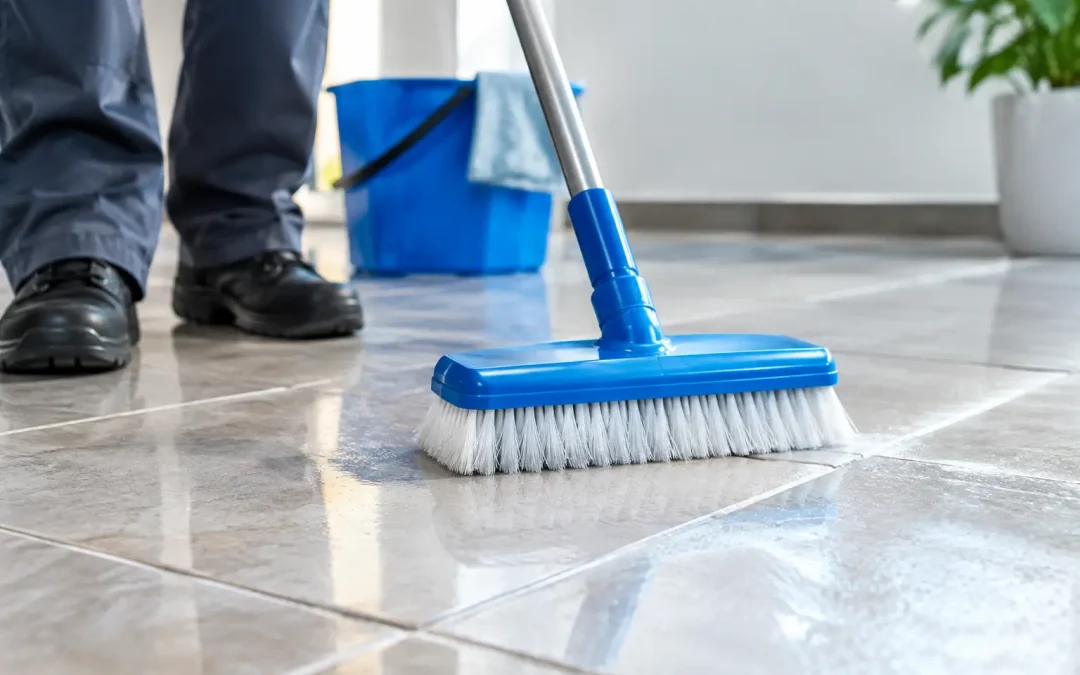
A tile floor can look clean after a quick mop and still hold months of embedded soil in its texture and grout joints. Ceramic tile deep cleaning addresses the buildup that everyday cleaning leaves behind, restoring a brighter, more even appearance without the cost and disruption of replacement.
For homeowners, the difference is often most noticeable in kitchens, entryways, bathrooms, laundry rooms, and showers. Areas that once looked permanently dingy can look cared for again when the tile and grout are cleaned with the right process.
What Ceramic Tile Deep Cleaning Removes
Ceramic tile is durable, but it is not maintenance-free. Its glazed surface can collect residue from cleaners, cooking oils, bath products, hard water, tracked-in dirt, and everyday foot traffic. Grout is even more vulnerable because it is porous and slightly recessed below the tile surface.
Over time, this buildup can leave floors looking dull or unevenly colored. In showers, soap scum and mineral deposits may create a cloudy film. In high-traffic rooms, grout can turn gray, brown, or nearly black even when the tile itself remains in good condition.
A true deep cleaning goes beyond applying a stronger household product. It combines appropriate cleaning solutions, agitation, extraction, and rinsing to lift soil from the tile surface and grout lines. The goal is not to make the floor look artificially glossy. It is to remove what is hiding the tile’s original color and finish.
Why Mopping Often Is Not Enough
Mopping is useful for routine upkeep, but it can also spread dirty water into grout joints if the water is not changed frequently. Some common floor cleaners leave a film behind, especially when used too heavily. That residue attracts more dirt and can make ceramic tile feel tacky or appear hazy.
Steam and DIY scrubbers can help in small areas, but they have limits. A homeowner may improve the surface appearance while leaving deep-set soil in grout lines. Aggressive scrubbing can also wear down weak or damaged grout, while acidic cleaners may harm nearby natural stone, metal fixtures, or certain grout treatments.
The right approach depends on the condition of the surface. A lightly soiled ceramic floor may need a detailed cleaning and rinse. A neglected floor with heavily discolored grout may need deeper extraction and, in some cases, grout color sealing to create a more consistent finish.
The Professional Ceramic Tile Deep Cleaning Process
Professional cleaning begins with an inspection, not a one-size-fits-all chemical. The surface needs to be evaluated for cracked tile, loose grout, missing grout, old sealers, stains, and areas where moisture may be getting behind the tile. Cleaning can improve appearance, but it cannot repair a loose tile or correct a failed shower installation.
After the inspection, the tile and grout are treated with a cleaner selected for the type of buildup present. Degreasing is often needed for kitchen floors, while bathroom tile may require attention to soap residue and mineral deposits. The solution is given time to work before controlled agitation loosens the soil.
Next, specialized equipment extracts the dirty solution instead of simply moving it around the room. This is a major part of the result. Removing the suspended soil and rinsing the surface thoroughly helps prevent the sticky residue and rapid re-soiling that can follow an incomplete cleaning.
Once the floor or wall tile is dry, the grout can be evaluated honestly. Cleaning may restore its original color, but not every grout line will return to a uniform appearance. Permanent staining, worn grout, and past spot treatments can leave color variations behind. When that happens, a color seal may be the better option.
When Grout Color Sealing Makes Sense
Grout color sealing applies a durable colorant to the grout after it has been cleaned and prepared. It can restore a consistent color, reduce the appearance of stubborn stains, and make future cleaning easier. Homeowners can often choose a shade close to the original grout color or select a different color that better suits the room.
This is not the same as applying a clear sealer over dirty grout. Clear sealing can offer some protection, but it does not hide discoloration. Color sealing is a restoration option for grout that is structurally sound but visually tired.
Tile Floors, Showers, and Backsplashes Need Different Care
Ceramic tile is used in several parts of the home, and each area gets dirty differently. Kitchen floors collect grease and food residue. Entryways bring in sand, pollen, and moisture. Bathroom floors pick up body-care products and mineral deposits. Shower walls deal with constant water exposure, soap scum, and humidity.
That is why a cleaning method that works well on a kitchen floor may not be appropriate for a shower. Shower grout that stays damp may have mildew staining or evidence of a ventilation issue. A backsplash may need gentle degreasing without oversaturating the wall. The best results come from treating the soil problem, not just treating every ceramic surface the same way.
In North Central Florida, humidity adds another consideration. Bathrooms and showers that do not dry well can develop recurring discoloration even after cleaning. Improving ventilation, using a squeegee after showers, and addressing leaking fixtures will help preserve the result.
What Homeowners Can Do Between Deep Cleanings
Routine care makes a professional cleaning last longer. Sweep or vacuum tile floors regularly so abrasive grit does not get ground into grout and across the tile surface. Use a neutral cleaner in the recommended dilution rather than adding extra product for a stronger scent or shine.
For spills, wipe them up promptly, especially cooking oil, coffee, wine, and products that can stain grout. In showers, removing excess water after use reduces mineral buildup and gives the grout more time to dry. Avoid harsh acidic products unless you are certain they are safe for every material in the area, including adjacent stone, metal, and grout.
It also helps to watch for changes that cleaning alone cannot solve. Crumbling grout, cracked tile, soft areas near a shower, recurring mildew, or tiles that sound hollow may point to a repair issue. Addressing those signs early can prevent a small surface problem from becoming a larger project.
When It Is Time to Schedule Service
Consider ceramic tile deep cleaning when regular mopping no longer improves the appearance, grout looks dark or blotchy, the floor feels sticky after cleaning, or shower tile has a persistent film. It is also a practical service before listing a home, after a renovation, or when preparing to host family and guests.
Natural Surface Restoration provides tile and grout cleaning and color-changing services for homeowners who want a clear assessment of what can be cleaned, restored, and protected. An estimate can help determine whether deep cleaning alone is the right choice or whether grout color sealing will deliver the more complete result.
Clean tile should not require covering the floor with rugs or avoiding a bathroom because the grout looks worn. With the right care and realistic expectations, ceramic surfaces can look brighter, cleaner, and far more at home in the space they were chosen for.