
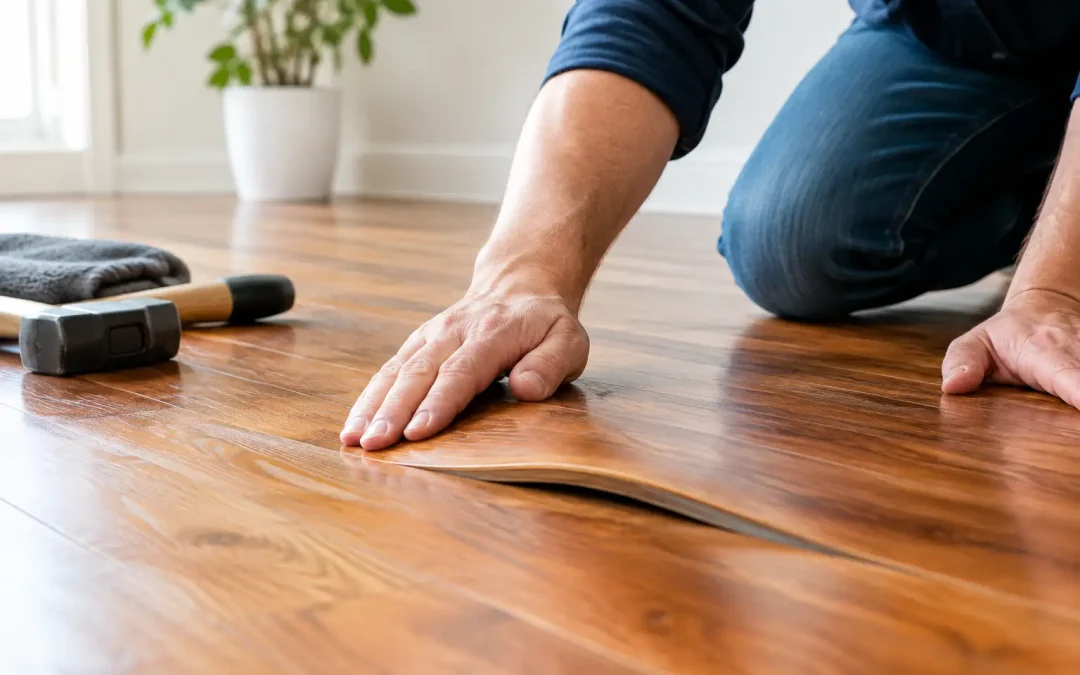
A hardwood floor that suddenly feels ridged underfoot is not just a cosmetic problem. When the edges of each board rise higher than the center, the wood is telling you it has taken on uneven moisture. To fix cupped hardwood floors successfully, the first job is not sanding or replacing boards. It is finding and stopping the moisture that caused the movement.
For homeowners in Gainesville and across North Central Florida, humidity, plumbing leaks, slab moisture, wet mopping, and water intrusion can all play a role. The good news is that many cupped floors can recover. The wrong fix, however, can turn a repairable moisture issue into permanent damage.
What cupping means in a hardwood floor
Cupping happens when the underside of a wood board is wetter than its finished face. Wood expands as it absorbs moisture. If the bottom expands more than the top, the board bends upward along both long edges, creating a shallow cup shape.
The pattern matters. Cupping across a large area may point to high indoor humidity, moisture rising from a crawl space, or a moisture issue in a concrete slab. Cupping near a refrigerator, exterior door, window, bathroom, or one wall is more likely connected to a localized leak or water event.
Do not confuse cupping with crowning. A crowned board has a raised center and lower edges, often because a previously cupped floor was sanded before it had fully dried. That distinction is one reason a careful diagnosis comes before restoration work.
Find the moisture source before you fix cupped hardwood floors
Drying a floor without correcting the source is only temporary. Start by looking for the obvious: a leaking appliance line, overflowing sink, plumbing leak, wet rug, pet accident, roof leak, or water entering through an exterior opening.
Then look below and around the floor. In homes with crawl spaces, check for standing water, damp soil, torn vapor barriers, poor ventilation, or wet insulation. On slab foundations, moisture can move upward through concrete if the flooring system was not properly protected or conditions have changed. A floor that cups seasonally throughout several rooms may be responding to indoor humidity rather than one active leak.
If water is still present, act quickly. Remove wet rugs and furnishings, address the leak, and use air conditioning or a dehumidifier to bring the indoor environment back under control. Fans can help circulate air, but they should not be used as a substitute for moisture removal. Blasting hot air directly at a wet floor can cause the surface to dry much faster than the underside, increasing stress on the boards.
Let the floor dry slowly and evenly
Hardwood needs time to equalize with its environment. Depending on the amount of moisture, species of wood, floor construction, and conditions below the floor, that process can take days or several weeks. A floor may look dry on top while moisture remains underneath.
Keep the home at a stable, comfortable temperature and humidity level. In Florida, air conditioning is often an important part of protecting wood floors during humid weather. A dehumidifier may be appropriate after a water incident, especially in a closed-up room, but avoid trying to force a rapid result.
Watch for gradual changes. In mild cases, the cupping may lessen as the moisture content returns to normal. Some movement can remain even after the underlying issue is corrected, particularly if the boards were wet for an extended period. That does not automatically mean replacement is necessary.
A moisture meter gives a more dependable answer than appearance alone. Restoration specialists use moisture readings in the wood, subfloor, and surrounding materials to determine whether the floor has stabilized enough for refinishing. Sanding a floor that is still drying is one of the most common and costly mistakes homeowners can make.
Why sanding too early creates a bigger problem
It is tempting to sand down raised board edges as soon as a floor cups. But sanding addresses the visible shape, not the moisture imbalance. If the boards flatten as they dry after being sanded, their centers can become higher than the edges. This is crowning, and correcting it may require additional sanding that reduces the usable life of the floor.
Premature sanding can also cut through finish unevenly, expose fresh wood to staining, and make a previously manageable floor look worse. Hardwood has only so much material available for refinishing, especially engineered wood with a thinner wear layer.
The better approach is to stabilize moisture first, then assess the remaining distortion. Once the floor is dry and stable, professional screening, sanding, refinishing, board repair, or selective replacement may be appropriate. The right choice depends on the floor’s construction and condition.
When cupped boards can be restored
Mild to moderate cupping often responds well once the moisture problem is resolved. Solid hardwood floors generally offer more refinishing options because their wear layer is thicker. If the boards have not split, loosened, blackened, or suffered finish failure, restoration can often improve both the appearance and feel of the floor.
Engineered hardwood requires more caution. Some engineered products can be lightly refinished, while others have a very thin veneer that cannot tolerate aggressive sanding. Floating engineered floors can also be affected by moisture beneath the planks, damaged locking edges, or swelling at the seams. In those cases, individual-board replacement may make more sense than attempting a full refinish.
Water staining is another factor. Gray or black discoloration can indicate that moisture penetrated deeply enough to react with the wood or affect the fasteners beneath it. Surface cleaning alone will not remove every stain, but a professional evaluation can determine whether refinishing, stain treatment, or replacement is the practical path.
Signs that call for a professional assessment
A homeowner can often stop a small spill and manage indoor humidity, but certain conditions deserve prompt attention. Call for an assessment if you notice any of the following:
- Boards are buckling, lifting, separating, or pushing against walls.
- The floor feels soft, spongy, or unstable underfoot.
- There is a musty odor, visible mold, or black staining in the wood.
- Cupping returns after drying, suggesting moisture remains below the floor.
- A large area is affected after flooding, a plumbing failure, or a roof leak.
These signs can point to subfloor damage, trapped moisture, adhesive failure, or a continuing water source. Replacing visible boards without investigating what is underneath may leave the original problem in place.
What professional hardwood restoration can do
A proper restoration plan begins with the cause, not just the surface. Natural Surface Restoration evaluates the condition of the wood, the severity and pattern of cupping, and whether the floor has had time to stabilize. That evaluation helps determine whether controlled drying, repair, refinishing, or replacement of damaged sections will deliver the best long-term result.
When refinishing is appropriate, the goal is to create an even surface without removing more wood than necessary. The floor can then be finished to restore its appearance and provide a protective layer against daily wear. If boards are beyond repair, selective replacement may preserve more of the original floor than a complete tear-out.
Preventing cupping from returning
Once the floor is restored, prevention comes down to moisture control. Wipe spills promptly, use mats at exterior entrances, avoid soaking floors during cleaning, and maintain steady indoor humidity whenever possible. Use a hardwood-safe cleaner sparingly rather than steam mops or heavy buckets of water.
Pay attention to slow changes, too. A small refrigerator leak, a failing dishwasher line, or moisture in a crawl space can affect wood long before a major water event becomes obvious. Addressing those conditions early protects the floor, the subfloor, and the investment already in your home.
A cupped hardwood floor does not always need to be replaced. Give the wood time to dry, correct the source of moisture, and get a qualified assessment before sanding or making permanent changes. That patient approach gives your floor its best chance to recover and look right for years to come.