
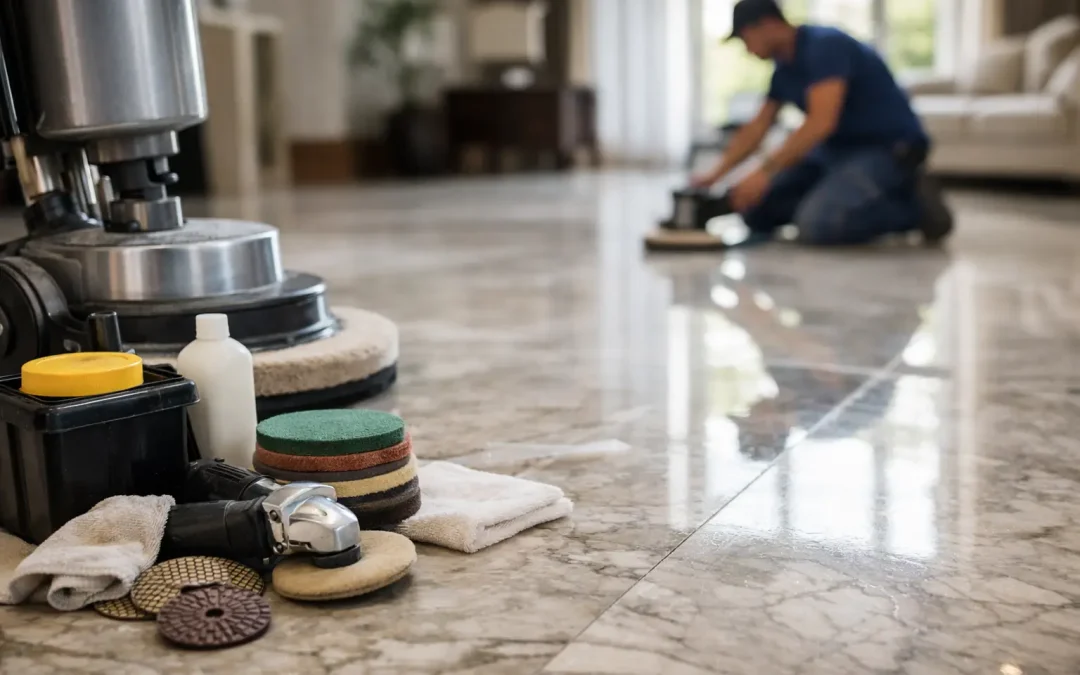
A marble floor can look worn long before it is worn out. Cloudy traffic paths, dull patches near the kitchen, rings around a bathroom vanity, and small scratches can make an otherwise beautiful floor feel like a replacement project. In many cases, professional restoration is the smarter choice. Marble floor restoration cost depends less on the room size alone and more on what the stone needs to look even, clean, and protected again.
For homeowners in Gainesville and across North Central Florida, the right estimate starts with an in-person evaluation. Marble varies widely in color, finish, installation quality, and condition. A technician needs to identify whether the problem is surface-level dullness, chemical etching, embedded staining, cracked tiles, loose grout, or a combination of issues before recommending a process and price.
What Is the Typical Marble Floor Restoration Cost?
Most marble floor restoration projects are priced by square foot, but final pricing often includes a minimum service charge because professional equipment setup, protection of nearby finishes, and detailed edge work take time regardless of room size. Light cleaning and polishing may fall near the lower end of a typical range, while deep honing, stain treatment, crack repair, and sealing move the project higher.
As a general planning range, homeowners may see professional marble polishing priced around $3 to $8 per square foot when the floor needs modest improvement. A more complete restoration involving honing to remove etching and scratches can often range from $6 to $15 or more per square foot. Extensive repairs, difficult stain removal, uneven lippage between tiles, or specialty finishes can increase the investment.
Those ranges are useful for setting expectations, not for replacing an estimate. A 200-square-foot marble foyer with light wear is a very different project from a 200-square-foot bathroom floor with hard-water deposits, damaged grout, and deep etching around the vanity. The condition of the surface determines the labor and abrasive steps required to restore it properly.
The Main Factors That Affect Restoration Pricing
The type and severity of damage
Marble is softer and more reactive than many homeowners realize. Acidic products, citrus, vinegar, bathroom cleaners, and some spills can etch the surface. Etching is not simply dirt on top of the stone. It is physical damage to the polished finish, which is why ordinary cleaning usually cannot make it disappear.
Light etching may be corrected with polishing. Heavier etching, scratches, or widespread dullness often require honing first. Honing uses progressively finer diamond abrasives to level the damaged layer before the stone is polished back to the desired sheen. More damage means more steps, more time, and a higher restoration cost.
Stains also affect pricing, although not every dark spot is a true stain. Some discoloration comes from moisture below the stone, failing grout, or a coating that has yellowed over time. A professional diagnosis helps avoid paying for the wrong treatment.
The size and layout of the floor
Square footage matters, but access and layout matter too. An open marble entry or large living area can be restored efficiently with professional floor machines. Small bathrooms, tight toilet areas, stair landings, closets, and rooms with many corners require more hand work.
Furniture removal, appliance access, floor transitions, baseboards, and carefully working around cabinets can also add labor. Before scheduling, homeowners should ask what needs to be cleared from the area and whether the estimate includes detailed work at the edges.
The desired finish
Not every marble floor needs a high-gloss, mirror-like finish. Some homeowners prefer a honed look with a soft, low-sheen appearance that is better at disguising everyday marks. Others want the crisp reflection associated with polished marble.
A polished finish can be beautiful, but it can also show etching and scratches more readily in busy rooms. A honed finish may be a practical choice for bathrooms, kitchens, and active households. The desired finish affects the process, and it should be discussed before work begins rather than decided after the floor has been restored.
Repairs and grout work
Cracked marble tiles, chipped edges, open joints, and deteriorated grout should be addressed as part of a complete restoration plan. A floor may polish well, but damaged joints or loose tiles can still leave it looking unfinished and may allow moisture to reach areas beneath the stone.
Repair work is usually quoted separately or added to the restoration scope because it depends on the number, location, and severity of problem areas. Color matching for marble chips and grout can require careful craftsmanship, especially on veined stone where an obvious patch would stand out.
Previous coatings and maintenance products
Wax, acrylic finishes, and some consumer stone products can leave marble looking hazy, streaky, or unnaturally shiny. These coatings may need to be stripped before the actual condition of the stone can be evaluated. That extra preparation can affect the total cost, but it is necessary when buildup is masking the marble instead of protecting it.
This is one reason do-it-yourself products can create a more expensive problem later. Marble should not be treated like ceramic tile. The wrong cleaner, coating, or abrasive pad can alter the finish and complicate professional restoration.
What a Professional Marble Restoration Process Includes
A proper service is more than applying polish. The work typically begins with an inspection of the stone, grout, damage patterns, and surrounding surfaces. The restoration team then protects adjacent finishes and chooses the least aggressive process that can deliver an even result.
For lightly worn marble, deep cleaning and polishing may be enough. For etched or scratched floors, the surface may need to be honed in stages, then polished or refined to a honed finish. Grout and minor repairs are handled according to the agreed scope. Once the floor is fully dry and the restoration work is complete, an appropriate penetrating sealer may be applied to help resist future staining.
Sealer is worthwhile protection, but it is not a shield against etching. It helps slow the absorption of many spills, giving you time to clean them up. Acidic liquids can still damage the finish on sealed marble, so regular care remains part of protecting the investment.
Restoration Versus Replacement
Replacing marble is often far more disruptive than homeowners expect. The cost can include demolition, disposal, subfloor preparation, new tile, installation, grout, transitions, and repairs to surrounding finishes. Matching existing marble may also be difficult if the original stone is discontinued or naturally varied.
Restoration preserves the material already in your home. It is generally less invasive, avoids unnecessary demolition, and can return a dated or damaged floor to a clean, uniform appearance. It is not always the answer, however. Marble with major structural movement, widespread loose tiles, severe moisture intrusion, or significant missing pieces may need repair or replacement work before restoration makes sense.
A trustworthy contractor should explain that distinction clearly. The goal is not to sell the biggest service. It is to recommend the work that gives the floor the best chance of lasting well.
How to Get an Accurate Estimate in Gainesville
When comparing estimates, make sure each company is pricing the same scope of work. Ask whether the service includes cleaning, honing, polishing, stain treatment, minor repairs, grout work, sealing, edge detailing, and protection of nearby areas. A low price may cover a basic cleaning when your floor actually needs mechanical honing to remove etching.
Photos can help begin the conversation, but they rarely show the full condition of marble. Natural Surface Restoration evaluates surfaces directly so homeowners understand what is causing the dullness and what level of restoration is appropriate. Before-and-after results and clear explanations of the process are valuable signs that a provider understands natural stone rather than treating every hard floor the same.
After restoration, use a pH-neutral stone cleaner, wipe spills promptly, and avoid vinegar, bleach, acidic bathroom products, and abrasive powders. Entry mats and soft pads under furniture help reduce grit and scratching in high-traffic areas. These habits will not eliminate normal wear, but they can extend the time between professional services.
If your marble floor has lost its shine, feels rough in certain areas, or has visible etching that cleaning will not remove, an on-site assessment is the practical next step. A clear estimate gives you a realistic path to restoring the stone you chose for your home and protecting it for years to come.