
A granite countertop can look flat long before it is actually worn out. If you want to polish dull granite counters, start by identifying what is taking away the shine. In many Gainesville-area kitchens, the problem is not damaged stone at all. It is often a layer of cooking residue, hard-water minerals near the sink, or cleaner buildup that masks the granite’s natural finish.
Granite is durable, but it is not maintenance-free. The wrong cleaner, an aggressive scrub pad, or a quick-fix coating can leave the surface looking worse than before. A careful approach protects the stone while helping you determine whether cleaning, polishing, sealing, or professional restoration is the right next step.
Why Granite Counters Look Dull
A polished granite surface reflects light because its face has been honed and mechanically polished smooth. When that reflection disappears, homeowners often assume the stone needs a new coat of sealer. Sometimes it does, but sealer does not create shine. Its job is to reduce absorption and help protect against staining.
The most common cause of dull-looking granite is surface film. Dish soap, all-purpose cleaners, spray disinfectants, oil splatter, and residue from hard water can all leave a cloudy appearance. This is especially common around the faucet, behind the cooktop, and in areas where countertop cleaners are used frequently.
Mineral deposits are another common issue. Water that dries repeatedly on the stone can leave a pale or grayish haze. On darker granite, it may show up as streaking or dull rings. The surface can also lose its uniform appearance when a topical product, such as wax or an oily “shine” treatment, attracts dust and builds up over time.
True finish damage is less common but possible. Granite may develop scratches, worn traffic patterns on heavily used islands, or isolated dull spots from abrasive cleaning. Some stones sold as granite may contain softer minerals that are more reactive than expected. That is why guessing based on color alone can lead to the wrong treatment.
How to Polish Dull Granite Counters Without Causing Damage
Start with cleaning, not polishing. A clean counter reveals whether you are dealing with residue or a finish problem.
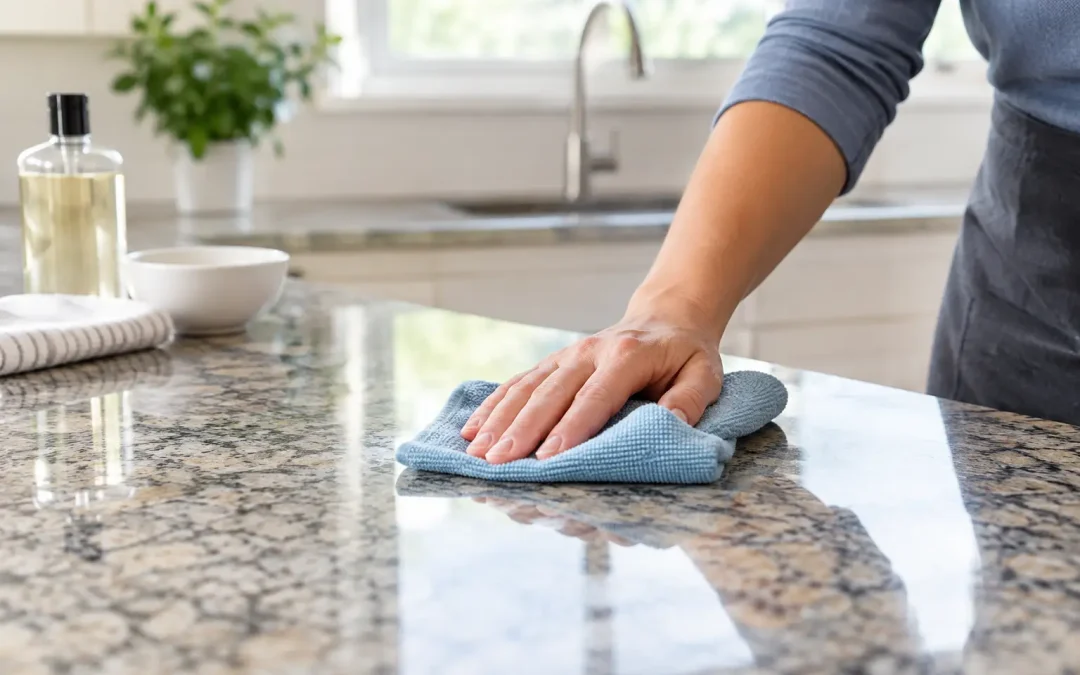
First, remove loose crumbs and grit with a soft microfiber cloth. Grit is small, but rubbing it around can create fine scratches over time. Then wash the counter with warm water and a pH-neutral cleaner made specifically for natural stone. Use a clean, damp microfiber cloth rather than a rough sponge.
Wipe the surface again with a separate cloth dampened with clean water. This extra step matters because even stone-safe cleaners can leave residue when they are overused or not fully removed. Dry the granite completely with another microfiber towel, buffing gently as you go. The counter should not air-dry, particularly around the sink.
Once the surface is clean and dry, inspect it from several angles. Turn on overhead lighting, then look across the countertop rather than directly down at it. If the granite now looks clearer and more reflective, buildup was likely the main issue. Continue with regular stone-safe cleaning and drying rather than reaching for stronger products.
If the counter still appears uniformly dull but feels smooth, you may use a granite polish designed for polished natural stone. Apply only a small amount, follow the product directions exactly, and buff with a clean microfiber cloth. Do not treat a countertop polish as a repair product. It may improve clarity temporarily, but it cannot correct scratches, etched areas, or a mechanically worn finish.
What not to use on granite
Avoid vinegar, lemon juice, bathroom cleaners, grout cleaners, and products containing harsh acids or alkalis. Granite is more acid-resistant than marble, but repeated exposure can still affect certain mineral components, damage surrounding grout, and strip or weaken protective treatments.
Also skip abrasive powders, scouring pads, steel wool, and melamine sponges. These can create fine scratches that scatter light and make a polished surface appear hazy. Wax-based furniture products and oily countertop treatments should be avoided as well. They may make the stone look shiny for a day, then leave a sticky film that is harder to remove.
When a Dull Granite Counter Needs More Than Cleaning
There is a clear difference between a dirty surface and a damaged finish. If the dullness is limited to a few spots, especially near the sink or cooktop, look closely for rings, scratches, roughness, or uneven reflection. These signs can point to mineral deposits, chemical exposure, abrasion, or residue that has bonded to the surface.
A white or chalky area around a faucet often indicates hard-water buildup. This needs to be removed carefully with methods appropriate for natural stone. Scrubbing harder is not the answer. An aggressive attempt can scratch the granite and turn a localized issue into a larger restoration project.
If water darkens the stone quickly and the dark spot remains for several minutes, the countertop may benefit from resealing after it has been thoroughly cleaned. This simple water test is only a general indicator, not a complete diagnosis. Absorption rates vary by stone, and some granites naturally take in very little moisture even without much sealer.
Deep scratches, chips, rough patches, and areas with noticeably lower reflectivity require a different process. Restoring the polish of granite usually involves professional-grade diamond abrasives, controlled polishing steps, and experience matching the repaired area to the surrounding finish. A household granite polish cannot reproduce that work.
Cleaning, Polishing, and Sealing Serve Different Jobs
Homeowners often hear all three terms used together, but each service solves a different problem.
Cleaning removes surface soil, grease, residue, and mineral film. It is the first step whenever granite looks cloudy or feels grimy.
Polishing improves the stone’s clarity and reflectivity. For lightly dull counters, this may involve a suitable stone polish after cleaning. For damaged finishes, it can require mechanical restoration.
Sealing helps limit the absorption of liquids into porous stone. It is a protective treatment, not a gloss treatment. Applying sealer over soap film, mineral deposits, or stains can trap the problem underneath and make the countertop harder to restore later.
Understanding that distinction can save money and prevent disappointment. A countertop that needs cleaning will not necessarily improve with sealer. A countertop with scratched or worn polish will not be repaired by a cleaner.
Keep the Shine After You Restore It
Granite responds well to simple, consistent care. Wipe spills promptly, especially cooking oil, wine, fruit juice, and dark sauces. Use trivets under hot cookware and cutting boards for food prep. Granite handles heat well, but sudden temperature changes and repeated impact are still hard on any countertop.
For daily cleaning, use a soft microfiber cloth with water or a pH-neutral stone cleaner. Dry the surface after cleaning and after heavy water use around the sink. This keeps mineral residue from forming and prevents cleaner film from dulling the finish.
Be cautious with homemade cleaning advice. A mixture that works on glass, ceramic tile, or stainless steel may not be right for natural stone. Granite is an investment surface, and its care should reflect that.
Professional Help for Dull or Uneven Granite
If your granite remains cloudy after proper cleaning, has visible scratches, or shows dull patches that stand out in kitchen lighting, it is worth having the surface evaluated before trying stronger chemicals or DIY abrasives. The right solution depends on the stone, the existing finish, the type of residue or damage, and whether the countertop needs restoration, cleaning, sealing, or a combination of services.
Natural Surface Restoration helps homeowners throughout North Central Florida assess and restore worn natural stone surfaces with the right process for the material. An in-person estimate can identify whether your counters need a deep clean, targeted stain or mineral removal, professional polishing, or protective sealing.
A granite counter should look clean and feel smooth without relying on temporary shine products. When the finish is properly restored and the stone is protected with the right maintenance routine, your kitchen can keep the polished appearance that made granite worth choosing in the first place.