
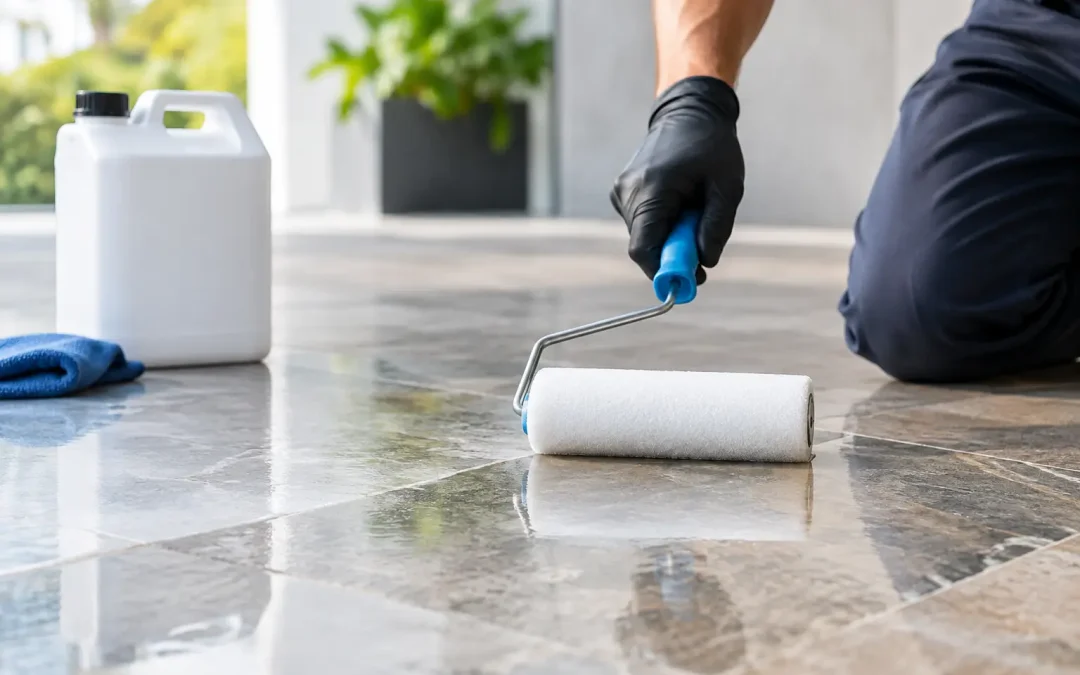
A stone floor can look clean one week and suddenly show dark spots, dull traffic paths, or rings around the sink the next. In many cases, the issue is not the stone itself. It is a worn, missing, or incorrectly applied layer of protection. The right stone sealers help natural surfaces resist everyday moisture and stains, but they cannot correct damage that is already in the material.
For homeowners in Gainesville and across North Central Florida, sealing is often part of preserving a valuable surface rather than replacing it. Marble, travertine, limestone, granite, terrazzo, and other stone materials all have different needs. Choosing a sealer starts with knowing what the surface is made of, what condition it is in, and how the space is used.
What Stone Sealers Actually Do
Most stone sealers are designed to reduce absorption. Natural stone contains pores, fissures, or tiny openings that can take in water, cooking oil, pet accidents, soap residue, and colored liquids. A quality penetrating sealer settles below the surface and slows that absorption, giving you more time to wipe up a spill before it becomes a stain.
That protection is valuable, but it has limits. A sealer does not make stone waterproof, scratch-proof, or acid-proof. It will not stop lemon juice, vinegar, wine, or harsh bathroom cleaners from etching polished marble or limestone. Etching is a chemical reaction that changes the surface finish, not a stain sitting inside the stone.
Sealers also do not restore shine to a dull floor. If a polished marble floor has lost its reflection, or a travertine floor has deepened in color from embedded soil, the surface may need professional cleaning, honing, polishing, or repair before protection is applied. Sealing over a problem often traps the problem in place.
Penetrating vs. Topical Stone Sealers
The most appropriate product depends on the stone and the desired result. Penetrating or impregnating sealers are commonly used on natural stone floors, countertops, showers, and exterior surfaces. They protect from within while leaving little or no visible coating on top. This helps preserve the stone’s natural look and allows moisture vapor to move through the material.
Topical sealers sit on the surface and may add sheen, deepen color, or create a wet-look finish. They can be useful in the right application, especially on certain porous stones or decorative concrete. However, they can also wear unevenly, scuff, peel, or become slippery when used in the wrong area. A glossy topical coating on a high-traffic stone floor may look appealing at first, then show traffic patterns far sooner than expected.
Enhancing sealers are another option. They darken stone and bring out its natural color variation, which can make tumbled travertine, slate, or some pavers look richer. The trade-off is permanence. Once a stone is enhanced, returning it to its original dry appearance can be difficult or impossible without substantial restoration.
Why Surface Preparation Matters More Than the Label
A premium sealer cannot perform properly on a dirty surface. Before sealing, the stone needs to be free of embedded soil, old coatings, waxes, soap film, grease, and residues left by household cleaners. This is especially true in kitchens, bathrooms, entryways, and outdoor living areas.
The stone must also be thoroughly dry. Applying sealer to damp stone can prevent proper penetration and may leave a hazy or blotchy appearance. In Florida’s humid climate, drying time is not always as simple as waiting a few hours. Stone, grout lines, and cracks can retain moisture below the visible surface.
Preparation may include deep cleaning, stripping an incompatible coating, stain treatment, grout cleaning, minor repairs, or honing away etching and scratches. Not every floor needs every step. The point is to correct the actual condition of the surface before choosing protection.
Which Stone Surfaces Need Sealing?
Porous materials generally benefit the most from sealing. Travertine, limestone, slate, sandstone, and many grout installations can absorb spills readily. Polished marble may be less absorbent than honed marble, but it can still benefit from appropriate protection, particularly on kitchen counters, vanity tops, and busy floors.
Granite is often described as maintenance-free, but that is not always accurate. Some dense granite needs little sealing, while lighter or more porous varieties can take in oil and moisture. A simple water test can offer a clue: place a few drops of water on a clean, dry surface and watch for darkening over several minutes. If the stone darkens quickly, it may be absorbing water and could need sealing. This test is only a starting point, not a full diagnosis.
Terrazzo deserves special attention because its composition varies. Cement-based terrazzo, epoxy terrazzo, and older installations can require different care methods. The wrong coating or cleaner can change the appearance, create buildup, or interfere with future polishing. Stone-like surfaces should never be treated as interchangeable just because they look similar from across the room.
How Often Should Stone Be Sealed?
There is no universal schedule. A kitchen countertop used every day may need attention more often than a low-traffic foyer. A honed limestone shower has different exposure than a polished granite vanity. The stone’s density, the quality of the original sealer, cleaning products, sun exposure, and foot traffic all affect how long protection lasts.
Instead of sealing by the calendar alone, watch for changes in performance. Water that once beaded on the surface may begin to darken the stone quickly. Spills may leave temporary marks longer than they used to. In a shower, the stone may become more difficult to clean even though there is no visible damage. Those are useful signs that it is time to evaluate the surface.
Over-sealing can be as troublesome as neglecting the job. If excess sealer is allowed to dry on the surface, it can leave streaks, haze, or sticky patches that attract dirt. More product does not automatically mean more protection. Correct application, including removing excess at the right time, is what creates an even result.
Common Mistakes That Shorten a Stone Floor’s Life
The most frequent mistake is using a cleaner that is too harsh. Acidic products can etch calcium-based stone such as marble, travertine, and limestone. Abrasive powders can dull polished surfaces. Oil soaps and some multi-purpose cleaners can leave residue that makes floors look cloudy and attracts more soil.
Another mistake is treating grout and stone as if they need the same product and process. Grout is usually more porous than the surrounding stone, so it may absorb sealer differently. Colored grout can also be affected by residue, cleaning chemistry, or an uneven application.
Homeowners sometimes apply a shiny coating to hide dullness. This can create a short-term visual change, but it does not solve etching, wear, scratches, or embedded grime. When that coating begins to fail, removing it can become a more involved restoration project.
When Professional Stone Sealing Is Worth It
A straightforward, clean, porous stone surface may be manageable for a careful homeowner. But professional assessment is valuable when there are stains, dull areas, haze, old coatings, uneven color, loose tiles, cracked grout, or uncertainty about the material. Those issues can change the right approach completely.
Natural Surface Restoration evaluates the condition of the stone before recommending cleaning, restoration, polishing, and sealing. That matters because protection should support the finish you want to preserve, whether the goal is a natural honed appearance, a polished reflective surface, or a refreshed travertine floor with clean grout lines.
If your stone has started absorbing spills, looking uneven, or losing the finish that made you choose it, avoid reaching for the first bottle on the shelf. A clear assessment and the right preparation can protect the surface you already own and help it continue looking at home in the years ahead.