
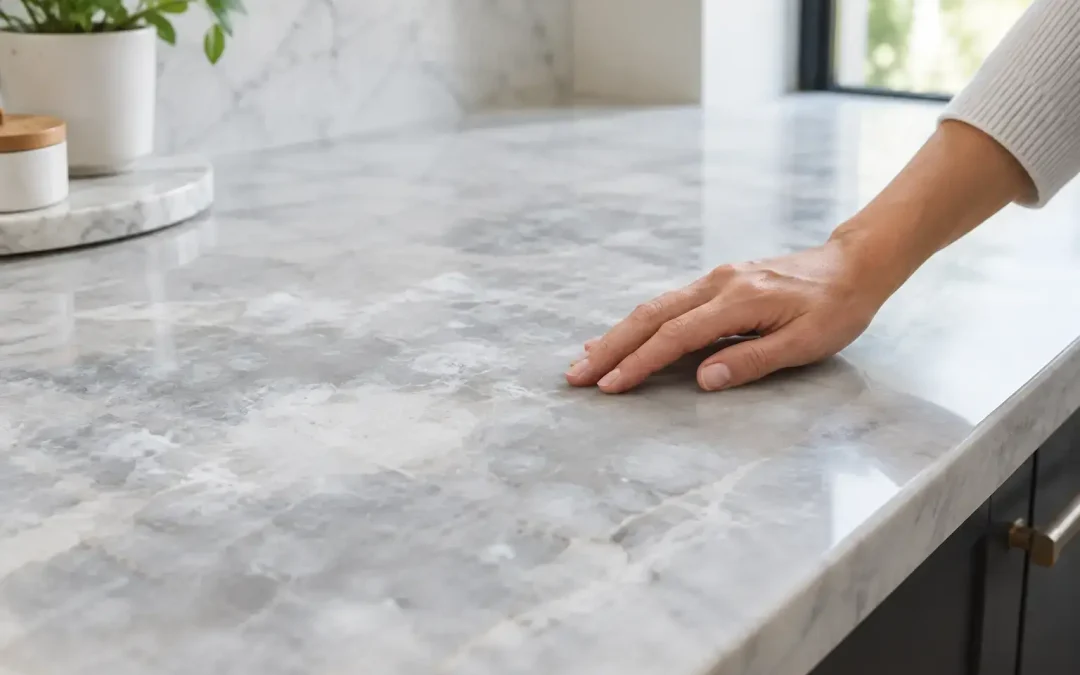
A marble vanity can look perfectly clean yet still appear dull, hazy, or marked by pale rings around the sink. That is frustrating because why does marble look cloudy is rarely answered by simply cleaning it again. Marble cloudiness can come from residue on the surface, damage within the finish, or a coating that is no longer performing as it should. The right fix depends on which one you have.
For homeowners, the key is not to keep adding stronger products. Marble is a calcium-based natural stone, and common household cleaners can permanently change its finish. A clear diagnosis protects the stone and helps determine whether a careful cleaning, professional honing, polishing, or sealing is the practical next step.
Why Does Marble Look Cloudy? Common Causes
Cloudiness is a description, not a diagnosis. It may look like a film, scattered dull spots, white rings, a broad loss of shine, or a grayish cast across a floor. Each pattern points to a different issue.
Etching from acidic products
Etching is one of the most common reasons polished marble loses its crisp reflection. Acid reacts with marble and lightly dissolves the surface, leaving a dull spot. Lemon juice, vinegar, wine, fruit, bathroom cleaners, toilet bowl cleaners, and some soap products can all cause it.
On polished marble, etching often looks lighter than the surrounding stone and feels smooth rather than rough. In a kitchen, it may show up near the prep area. In a bathroom, it often appears as rings or splashes around the vanity. Because the stone itself has been affected, wiping the surface or applying more sealer will not restore the shine.
Cleaner or soap residue
A cloudy film that appears across a large area may be residue. Many all-purpose cleaners, oil soaps, waxes, and products marketed for shine leave material behind. Repeated applications can create a streaky or muted finish that attracts more dirt over time.
Shower marble is especially prone to soap scum, body oils, and mineral deposits. North Central Florida water can also leave minerals behind as it dries, particularly around faucets, shower walls, and floor edges. This type of haze may improve with correct stone-safe cleaning, but it should not be attacked with vinegar or abrasive powders.
Worn polish and fine scratching
Marble floors naturally lose their polish in high-traffic paths. Grit tracked in from outside acts like fine sandpaper under shoes, gradually creating tiny scratches. The result is a cloudy-looking walking lane that may be most noticeable when sunlight hits the floor at an angle.
This is not always a stain, and it is not necessarily a cleaning failure. It is wear. Cleaning can remove soil from the scratches, but restoring clarity usually requires professional honing and polishing to refine the marble surface evenly.
A failing topical coating or incorrect sealer
Some marble has been coated with wax, acrylic finish, or another topical product in an attempt to add shine or protect the surface. These coatings can yellow, scuff, peel, or turn cloudy when moisture gets beneath them. They can also make marble look artificially shiny at first, then uneven and dirty later.
A penetrating stone sealer works differently. It is meant to help resist staining below the surface without creating a visible layer on top. Even a quality penetrating sealer will not prevent etching, repair dull marble, or make a damaged polished finish shiny again.
Moisture beneath or within the stone
Moisture-related cloudiness is less common, but it matters. Marble around showers, tubs, exterior entries, or wet areas can develop darker patches, pale haze, or uneven coloration when water moves through grout, stone, or an improper installation layer. A recent spill can temporarily darken marble, while persistent changes may point to a moisture source that needs attention.
If the cloudy area is growing, returns after cleaning, or appears near a plumbing fixture, address the moisture issue before investing in restoration. Polishing a surface without correcting an active leak can lead to the same problem again.
How to Tell Residue From Marble Damage
A close look can prevent a costly mistake. Start by cleaning a small, inconspicuous area with a pH-neutral cleaner made specifically for natural stone and a clean microfiber cloth. Follow the product directions, rinse if required, and dry the area completely.
If the haze lifts or becomes noticeably more even, surface residue may be the main problem. If pale dull spots remain in the exact shape of splash marks, drink rings, or drips, etching is more likely. If the entire traffic path looks soft and lacks reflection, the polish may be worn. If the surface feels rough, crusty, or raised near water fixtures, mineral buildup may be involved.
Do not use the popular vinegar test. Vinegar itself can etch marble, turning a small question into a new repair. Avoid steel wool, scouring pads, powdered abrasives, bleach, and acidic bathroom products as well. A product can be safe for ceramic tile and still be wrong for natural stone.
What You Can Do Safely at Home
For light residue and everyday maintenance, use a stone-safe neutral cleaner, soft microfiber cloths, and clean water as directed. Drying the marble after use helps prevent water spotting, especially on vanity tops and shower surfaces. On floors, use a clean microfiber mop rather than soaking the stone.
Prevention also matters. Wipe up citrus, wine, coffee, sauces, and personal-care spills promptly. Use coasters under drinks, trays below products that may drip, and mats in entryways to reduce grit. Felt pads under decorative items can prevent small scratches on countertops and tables.
There is a trade-off with do-it-yourself polishing products. Some can improve a very light etch or dull area, but marble polishing powders and pastes require the right technique and are not equally effective on every marble finish. An uneven attempt can leave a visibly different sheen, swirl marks, or a larger dull patch. Honed marble is meant to have a softer appearance than polished marble, so trying to force a high-gloss shine may not match the original design.
When Professional Marble Restoration Makes Sense
Professional service is usually the better choice when cloudiness is widespread, etching is obvious, a coating is failing, or the marble has lost its finish in traffic areas. The restoration process is tailored to the stone and the damage. It may include deep cleaning, safe removal of incompatible coatings, honing to remove etches and scratches, polishing to restore clarity, and sealing for improved stain resistance.
The goal is not to make every marble surface look identical. Some marbles have natural veining, pits, color movement, and a naturally lower sheen. A skilled restoration approach works with those characteristics while improving the condition of the finish. It also helps avoid replacing stone that still has years of useful life.
For a floor, vanity, shower, or countertop that stays cloudy after proper cleaning, Natural Surface Restoration can evaluate what is affecting the marble and recommend the appropriate restoration method. A clear assessment is especially valuable before using stripping products, polishing kits, or a new coating that could complicate the repair.
Keep the Finish Looking Clear After Restoration
Once marble has been restored, simple habits go a long way. Use neutral stone cleaners, keep acidic products away from the surface, and clean spills before they sit. Reseal only when the stone needs stain protection, not as a response to dullness or etching. Sealer is helpful maintenance, but it is not a shine product.
Cloudy marble does not automatically mean your stone is ruined. In many cases, the haze is a repairable combination of residue, etching, wear, or an outdated coating. Identifying the cause first gives you the best chance of bringing back the clean, natural appearance that made marble worth choosing in the first place.