
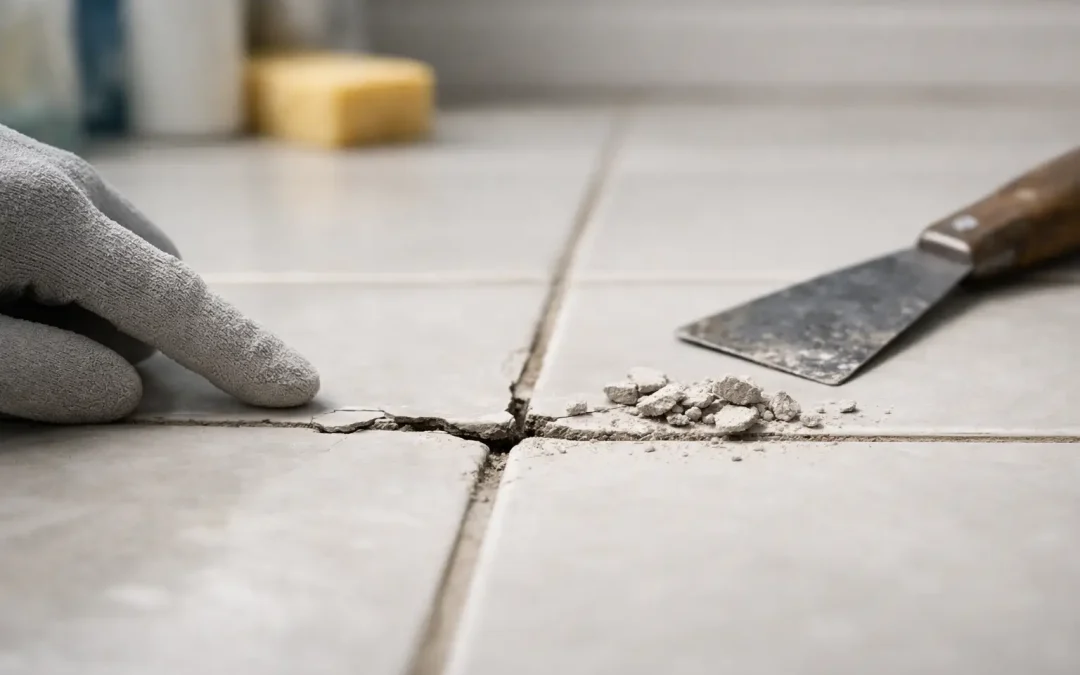
A thin crack in a grout line can look like a simple cosmetic problem, but why grout cracks often comes down to movement below or around the tile. The right repair depends on the cause. Filling a crack without addressing that cause may make the floor or shower look better briefly, only for the same line to reopen.
Grout is hard, but it is not flexible. It fills the joints between tiles, supports their edges, and gives the installation its finished appearance. When the tile, wall, floor, or backing material shifts, grout is usually the first place that stress becomes visible.
Why Grout Cracks in Tile Floors and Showers
Some grout cracking is minor and isolated. Other cracking is a warning that moisture, installation problems, or structural movement needs attention. The location and shape of the crack matter.
A single hairline crack in an older floor may result from normal movement over time. Several cracks running in the same direction, cracks that return after repair, or cracks paired with loose tile deserve a closer look. In a shower, cracked grout can also allow water to reach areas behind the tile, where it can damage backing materials and contribute to mold or staining.
Movement in the Subfloor or Wall
Tile is rigid, and grout is even less forgiving. Wood subfloors can flex when people walk across them, particularly if the floor system was not prepared correctly for tile. Concrete slabs can also develop small cracks or move slightly as the home settles. North Central Florida homes may experience seasonal moisture changes around foundations and slabs, which can add to that movement.
When the surface beneath the tile moves, grout joints can split. If the tiles themselves are loose, hollow-sounding, or cracked, the issue is likely more than surface grout. Regrouting alone will not stabilize tiles that no longer have a secure bond.
Missing or Failed Expansion Joints
Tile installations need room to expand and contract. This is especially true along walls, cabinets, doorways, and transitions between rooms. Those perimeter joints should generally be filled with a flexible sealant, not rigid grout.
When grout is packed tightly against every wall and fixed surface, normal expansion has nowhere to go. Pressure builds across the tile field and may show up as cracked grout, tenting tile, or tiles that begin to lift. A flexible joint is a small detail that protects a much larger area.
Installation and Bonding Problems
Grout may crack because the tile was installed over an uneven surface, inadequate underlayment, or poorly prepared concrete. Tile needs consistent support beneath it. Gaps in thinset mortar leave unsupported areas that can flex under foot traffic, putting stress on the grout joints around them.
In some cases, the grout itself was applied too soon, before the setting materials had cured. In others, the grout joints were not packed fully, leaving weak or shallow areas that break down faster. These issues can remain hidden for months or years before cracks begin to appear.
Improperly Mixed or Applied Grout
Not every grout crack points to a failed tile installation. Grout mixed with too much water can shrink as it dries, producing fine surface cracks. Powdery grout, pinholes, or shallow cracks across many joints may indicate mixing or application issues rather than movement below the tile.
Cleaning practices can make this worse. Harsh acidic cleaners, frequent bleach use, and aggressive scrubbing can erode cement-based grout over time. The result may be joints that look washed out, rough, or cracked at the surface. A professional cleaning and color-sealing approach can restore heavily stained or worn joints when the tile installation itself remains sound.
Moisture Behind Shower Tile
A shower is different from a tile floor because water is part of its daily environment. Grout is not waterproof, even when it has been sealed. It helps manage the tile surface, but the waterproofing system behind the tile is what protects the wall or shower pan.
Cracked grout around a shower valve, bench, curb, niche, or wall corner can be a sign of movement or moisture-related failure. Cracks at changes of plane, such as where a wall meets another wall or the shower floor, are especially common because these areas need flexible caulk rather than rigid grout.
If grout is cracking repeatedly in a wet area, or if there are soft walls, persistent odors, loose tile, or discoloration around the shower, avoid treating it as a simple touch-up. Water damage behind tile can grow quietly.
What the Crack Pattern Can Tell You
The pattern is often more useful than the width of the crack. A narrow crack around one tile may be localized. A continuous crack that travels through multiple grout joints can reflect movement in the substrate below.
Cracks at corners and along the edge of a tub, countertop, or shower wall commonly occur because grout was used where flexible sealant should have been used. Cracks across the middle of a floor, particularly those that follow a straight line for several feet, may correspond with a crack in the concrete slab or a seam in the underlayment.
Loose or rocking tiles change the diagnosis. If a tile moves when pressed, the adhesive bond or supporting surface has likely failed. Grout repair can improve the appearance temporarily, but the tile needs to be addressed first. Likewise, a tile crack that runs through the body of the tile is not a grout issue and should be evaluated separately.
When Regrouting Is the Right Repair
Regrouting is often effective when the tile is firmly bonded, the cracks are limited to the joints, and there is no ongoing movement or moisture damage. The damaged grout should be removed to a proper depth before new grout is installed. Smearing new material over a cracked joint rarely holds up because it lacks enough depth to bond well.
Once repairs are complete, grout color sealing can provide a consistent color and make future cleaning easier. Color sealing is particularly useful for older tile floors where grout has become permanently darkened, blotchy, or difficult to maintain. It does not correct structural movement, but it can protect sound grout and refresh the entire floor without replacement.
The trade-off is straightforward: a focused grout repair costs less and preserves an otherwise good tile surface, but it should not be used to hide symptoms of loose tile, water intrusion, or a failing substrate. Those conditions require a more complete repair plan.
How to Prevent New Grout Cracks
Prevention begins with using the right material in the right location. Flexible caulk belongs at changes of plane and perimeter joints. Proper grout belongs between stable tile joints. A quality installation also needs an appropriate underlayment or crack-isolation system, sound mortar coverage, and enough movement accommodation for the size and location of the tile field.
For existing tile, avoid soaking grout with harsh chemicals or using highly acidic cleaners unless the product is specifically approved for the surface. Use a pH-neutral cleaner for routine care, address leaks promptly, and watch for grout that repeatedly cracks in the same place. Repeated cracking is useful information, not just an appearance issue.
Natural Surface Restoration helps homeowners identify whether worn or damaged grout can be restored through cleaning, repair, and color-changing services or whether the tile needs a more involved solution. A careful assessment protects the value of the tile surface and prevents unnecessary replacement.
If your grout crack is isolated and the tile feels solid, a targeted repair may be all that is needed. If cracks keep coming back, spread across the room, or appear alongside loose tile or shower moisture concerns, treat that pattern as a reason to investigate what is happening beneath the surface.